Services
Laparoscopic Surgery
Laparoscopic surgery offers minimally invasive options for spays, cryptorchid castrations and organ biopsies. This method results in significantly smaller incisions and post-operative pain resulting in faster recovery for your patients. Organ biopsies offer the same with the additional benefit of improved diagnostic and patient outcomes.
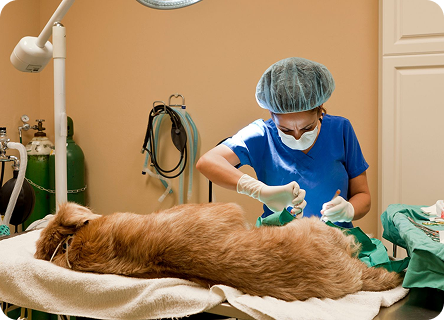
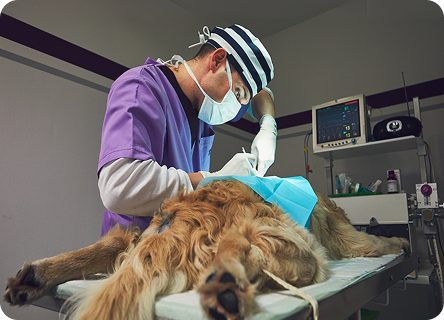
Orthopaedic - Surgery
Soft tissue surgery
Procedure List
This list is not exhaustive — please call or email to discuss any other procedures.
Endosurgery
Laparoscopic Spay (Ovariectomy) — ideally 2–3 in one visit (minimum weight 7kg)
Laparoscopic Ovariohysterectomy (minimum weight 7kg)
Laparoscopic Prophylactic Gastropexy
Laparoscopic Cryptorchid (unilateral / bilateral)
Laparoscopic Biopsy (e.g., liver biopsy)
Laparoscopic-assisted Foreign Body Removal, Intestinal Biopsy
Orthopaedic Surgery
Limb Amputation
Femoral Head and Neck Excision (FHNE)
Cruciate repair (Cranial Closing Wedge Osteotomy)
Late Meniscal Tear Treatment (arthrotomy & meniscal debridement)
Fracture — Uncomplicated (excluding implants)
Soft Tissue Surgery
Mammary Strip — Full, Unilateral
Mass Removal & Complex Skin Flap (case dependent)
Feline Thyroidectomy
Cherry Eye — unilateral / bilateral
Entropion — unilateral / bilateral
Anal Gland Removal — unilateral / bilateral
Hernia — Diaphragmatic
Hernia — Perineal
Urethrostomy — Perineal, Cat
Sialadenectomy (mandibular)
Gastrotomy / Enterotomy / Cystotomy
How to Make a Booking
To help keep things streamlined, please make all non-urgent bookings and any cancellations by email: roamvetsurg@gmail.com.
What to include in the email
- The type of procedure required.
- The patient’s details, including latest weight, clinical history, and any images taken.
For cruciate surgery: please include the tarsus in the X-rays and ensure the femoral condyles are overlapping. - The practice address, including postcode.
- The name of the veterinary surgeon overseeing the case.
- An idea of when you’d like the appointment, so we can try to accommodate it.
- For laparoscopic spays/cryptorchids: how many cases you have on your list. To keep these cost-effective it makes sense to do 2 to 3, possibly 4 in one visit.
Terms of Business
What we provide
- Review of the clinical history and imaging, to determine an appropriate surgical plan, which we’ll communicate to you.
- A cost estimate and a suitable date to perform the procedure.
- Advanced equipment and implants.
- The surgical procedure, including post-operative radiographs as necessary (pre-operative radiographs may in some cases be required, or need to be repeated).
- A surgical report.
- Support for your practice through the post-operative recovery period.
- Advance notice if a procedure is likely to need a scrubbed-in assistant.
What we ask of your practice
- Supply pharmaceuticals (e.g. anaesthetic drugs, analgesia, antibiotics, and pain relief) and consumables (e.g. suture material, drapes, dressings, bandages, needles and syringes, and in some instances common surgical instruments).
- Carry out a health check 2–7 days before the procedure, to exclude conditions that would preclude surgery (e.g. pyoderma, otitis, urinary tract infections, respiratory infections, severe dental disease) — this is especially important ahead of elective orthopaedic procedures such as CCWO for cruciate disease.
- On the day of surgery, prepare an intravenous cannula, give premedication, induct anaesthesia, and prepare the patient for surgery.
- Provide a registered veterinary nurse to monitor the general anaesthetic, and an MRCVS to oversee the anaesthetic plan and post-operative period.
- Take responsibility for the general anaesthetic and post-operative recovery period — we do not accept responsibility for anaesthetic monitoring or recovery.
- Remain the primary point of contact for the owner; please don’t pass our contact details on to clients.
- Carry out post-operative checks — typically at 3–5 days and 14 days, plus 6–8 weeks post-op for orthopaedic cases.
- Settle invoices within 30 days of issue.